Showing posts with label Military. Show all posts

Thursday, March 25, 2010

Fr. Vincent R. Capodanno - Medal of Honor -

In December 2006, following the funeral of John's Aunt Margaret, we all gathered at the John Venditti Post #1 of Italian-Amercian Veterans. One of John's uncles is very involved with the post and we were looking at the various citations and pictures on the walls.

One picture that caught my eye was that of Father Capodanno. I've been told by various people that John is related to him but I have, as yet. not proven the relationship. John's great-grandmother was Filomena Capadano. I know of three of her brothers but nothing that connects to Father Capodanno. I admit that I haven't worked very hard at researching the relationship but I have spent many hours reading about Father Capodanno.

Born February 13, 1929 in Richmond Co, NY, he was the youngest of the nine children of Vincent R. and Rachel Capodanno, Sr. His father died when he was only ten years old and the family struggled to support themselves. I have learned little else about his childhood years.

He attended a year at Fordham University and then entered the Maryknoll Missionary Seminary. His work sent him to Taiwan and later to Hong Kong. He requested to be assigned as a USN Chaplain serving with the US Marines. When his tour was up he requested an extension.

He was known as the Grunt Padre and was respected and revered by those he served with. He was killed September 4, 1967 in Que Son Valley, Quang Tin Province, South Vietnam, 30 miles south of Dan Nang. He had been shot in the hand earlier in the day but stayed in the field with his men. Later a mortar shell exploded near him, severely injuring his arm and still he stayed. He ministered to all those that he could get to. His death came from machine gun fire as he tried to help a corpsman. He was awarded the Medal of Honor posthumously.

*CAPODANNO, VINCENT R. Rank and organization: Lieutenant, U.S. Navy, Chaplain Corps, 3d Battalion, 5th Marines, 1st Marine Division (Rein), FMF. Place and date: Quang Tin Province, Republic of Vietnam, 4 September 1967. Entered service at: Staten Island, N.Y. Born: 13 February 1929, Staten Island, N.Y. Citation: For conspicuous gallantry and intrepidity at the risk of his life above and beyond the call of duty as Chaplain of the 3d Battalion, in connection with operations against enemy forces. In response to reports that the 2d Platoon of M Company was in danger of being overrun by a massed enemy assaulting force, Lt. Capodanno left the relative safety of the company command post and ran through an open area raked with fire, directly to the beleaguered platoon. Disregarding the intense enemy small-arms, automatic-weapons, and mortar fire, he moved about the battlefield administering last rites to the dying and giving medical aid to the wounded. When an exploding mortar round inflicted painful multiple wounds to his arms and legs, and severed a portion of his right hand, he steadfastly refused all medical aid. Instead, he directed the corpsmen to help their wounded comrades and, with calm vigor, continued to move about the battlefield as he provided encouragement by voice and example to the valiant marines. Upon encountering a wounded corpsman in the direct line of fire of an enemy machine gunner positioned approximately 15 yards away, Lt. Capodanno rushed a daring attempt to aid and assist the mortally wounded corpsman. At that instant, only inches from his goal, he was struck down by a burst of machine gun fire. By his heroic conduct on the battlefield, and his inspiring example, Lt. Capodanno upheld the finest traditions of the U.S. Naval Service. He gallantly gave his life in the cause of freedom.

Father Capodanno is buried in St. Peter's Cemetery, West Brighton, Richmond, NY. His memorial at findagrave.com has more than 170 notes.

Several Chapels, a road and a Navy Frigate have been named for Father Capodanno. The USS Capodanno was commissioned in 1973 and blessed by Pope John Paul II on 4 July 1981, the first ship in the US Fleet to receive a Papal Blessing. It was decommissioned in 1993. There are many websites dedicated to his memory. Currently there is a call for Canonization of Father Capodanno. Please visit the website and take a minute to watch the video there, I found it very moving.

When the traveling Vietnam Veterans Memorial Wall  was in Syracuse I was fortunate to be able to drive a group of students to see it. I was able to talk to the students on my bus about Father Capodanno a bit and it was nice to find them (and their teachers!) receptive to my commentary.Having a name to look for on the wall made the experience very personal for me.


The above is a slightly edited version that has previously appeared at Apple's Tree on 30 December 2006
and 25 March 2010

Abraham Jay Buckles - Medal of Honor - 1864


Abraham Jay Buckles was born 2 August 1846 near Muncie, Delaware, IN. He was the second child of Thomas Newton Buckles and Rachel Graham. It appears that about 1852 Thomas, in the company of his brother-in-law, James Madison Graham, succumbed to the lure of California gold. Thomas must have returned at some point, as the youngest child, J. Newton Buckles, was born about 1857, however in 1860 Thomas is found on the census for Vacaville, Solano, CA. Abraham was living with his grandparents, Abraham and Elizabeth Buckles in Centre Township, Delaware, IN. His mother and siblings were living next door.

History of the bench and bar of California:
Abraham Jay Buckles was born in Muncie, Indana, August 2, 1846. He was sent from home to live on a farm at the age of six years. In the winter season he attended school.

When the war broke out in 1861, he enlisted in a company raised at Muncie, under the call of the President for volunteers for three months' service. He was not yet 15 years old, and his grandfather would not permit him to go. When the call for troops to serve three years was made, he enlisted again. June 21, 1861, and, informing his people that he was determined in the matter, they made no further opposition. He went to Washington in Company E, 19th Indiana Infantry, which afterwards became a part of the famous fighting "Iron Brigade" of the Army of the Potomac.

Why he was sent to live with his grandfather, rather than stay with his mother I have no idea but as she was close by I can only imagine at the worry she must have felt at this time. Not only did Abraham enlist, but his older brother, Francis did as well. Francis would not return home.

Abraham's Medal of Honor Citation says very little:

BUCKLES, ABRAM J.

Rank and organization: Sergeant, Company E, 19th Indiana Infantry.
Place and date: At Wilderness, Va., 5 May 1864.
Entered service at: Muncie, Ind.
Birth: Delaware County, Ind.
Date of issue: 4 December 1893.

Citation: Though suffering from an open wound, carried the regimental colors until again wounded.

The Medal of Honor was awarded to Abraham for one instance of bravery in a single battle but this barely tells the tale of his Civil War service. Abraham was wounded several times and in the end he lost a leg. The History of Solano and Napa Counties, California gives a detailed and thrilling account of his service:
He was a lad of fifteen years when the tocsin of war called able-bodied men to the defense of the country and in June, 1861, he was among the number who responded to Lincoln's first call for three-year men, being attached to Company E, Nineteenth Indiana Volunteer Infantry. Mustered in at Indianapolis, his regiment became a part in the second Battle of Bull Run. In that engagement he was shot through the thigh and was confined in the hospital for three months, after which he again offered his services and took part in the first and second battles of Fredricksburg, Chancellorsville and Gettysburg, being attached to the color guard. It was his ambition to be the color bearer of his regiment and for that reason stationed himself on the left so that he would be next to the bearer and ready to take the colors in case the color bearer was injured. The bearer was wounded in the morning, and young Buckles promptly picked up the colors, which he proudly carried until the afternoon the same day, when he, too, was wounded, having received a shot through the right shoulder. Handing the flag to his comrade next in line, he was taken from field and was confined to the hospital for several months. His anxiety to be in the field of action once more secured his release before his wound was entirely healed, but he was able to resume his old post as color bearer and was serving in this capacity in the Battle of the Wilderness, when he was once more disabled, this time being shot through the body. As before, in spite of his intense suffering, he did not allow the colors to disappear, handing the flag to young Devilbuss, who lost his life soon afterward. At the Battle of the Wilderness the regiment became scattered in the rush through the woods, and inasmuch as he could see no field officer, Color Bearer Buckles led the charge himself, the men promptly following, and in the conflict Mr Buckles received what was thought to be a mortal wound, being shot through the body. In spite of the fact that he was so badly wounded as to be given up for dead, he managed to make his way to the rear, when the ambulance came up he was taken to the temporary hospital. The examining surgeon pronounced his case hopeless and would not even probe the wound, the same being true of his treatment in the field hospital, to which he was removed. Finally, when orders were issued to remove the inmates to Fredericksburg, Buckles sent for the physician and begged not to be left behind. The doctor replied that his orders were strict and as he had been given up to die, could not be removed. He remonstrated that the physicians had said two days before that he would die and that he found himself no worse, and finally obtained the promise that if he could stand when the ambulance came he would be removed to Fredericksburg and receive proper care. To make the promise good, Buckles stood with the aid of sticks for crutches, and was taken to the hospital, and as soon as his wounds were given attention he began to recover. He was able to rejoin his regiment before the Battle of Petersburg, having been promoted and commissioned second lieutentant. During all this time, however, his wound remained open and remained so until early 1870. While on skirmish duty, March 25, 1865, he was again wounded, this time in the right leg, which necessitated amputation seven inches from the body. His honorable discharge followed two months later, May 15, 1865, after the close of the war. He was awarded the medal of honor by congress for meritorious conduct upon the battlefield of the Wilderness, May 5, 1864. He returned home to Indiana, battle scarred and disabled, and as yet a mere boy in years, not nineteen years old.

Abraham returned home and went to school. He work variously as a teacher, a clerk and at other jobs as he could find them. On 5 December 1865, in Delaware County, IN, he married Louisa B. Conn and to them two daughters were born, Lola Bell in 1867 and Addie Jessie in 1868. In his spare time he undertook the study of law and in 1875 was admitted to the bar.

Abraham must have retained a relationship with his father as he moved his family to Solano County, CA in the spring of 1875 were he became quite successful. Again, from The History of Solano and Napa Counties, California:
In the spring of 1875 he was admitted to the bar and immediately thereafter came to California and located in Dixon, Solano county. Opening an office for the practice of his profession, the recognition of his exceptional ability and justice in the handling of legal complications was apparent from the first, and was the forerunner of a large and influential clientele. Substantial recognition of his ability came to him in 1879, when he was elected district attorney of Solano county under the new constitution, and at the close of his first term he was re-elected, serving altogether over five years. In 1884 he received the nomination for the office of superior judge and as the successful candidate he took office in January, 1885, and for over twenty years thereafter he held the office continuously. In April, 1905, he was appointed by Governor Pardee from the superior bench as one of the judges of the appellate court for the third district, and after the close of his term he again took up the practice of law, at this time locationg in Fairfield. As on former occasions he was successful in building on a commendable practice but he was not long allowed to confine his attention to private practice. Judge Devlin, who had been elected superior judge in 1908, held the office just one month and twenty days, when pressure of private business made it necessary for him to resign, whereupon Governor Gillett appointed Judge Buckles to fill the unexpired term.

Abraham remained on the bench until his death 9 January 1915 at a hospital in San Bernardino County, CA. He was buried in Suisun-Fairfield Cemetery, Fairfield, CA. You can visit his memorial at Find-a-Grave.

Abraham was my 1st cousin, three times removed. I was with my 2nd great-grandfather, James Madison Graham, that his father left for California.

This an updated article that originally appeared at Apple's Tree, 25 March 2009

Sources:

History of the bench and bar of California: being biographies of many remarkable men, a store of humorous and pathetic recollections, accounts of important legislation and extraordinary cases, comprehending the judicial history of the state
By Oscar Tully Shuck
Contributor Oscar Tully Shuck
Edition: reprint
Published by The Commercial printing house, 1901
Original from the University of Michigan
Digitized Feb 20, 2008
1152 pages
pages 672 – 675, viewed at Google Books, 24 March 2009


History of Solano and Napa Counties, California : with biographical sketches of the leading men and women of the counties, who have been identified with its growth and development from the early days to the present time: History by Tom Gregory and other well know writers; Historic Record Company, Los Angeles, California [1912]; viewed at ancestry.com 8 Feb 2009.

Tuesday, March 23, 2010

National Medal of Honor Day, March 25th

Thursday, March 25, 2010, is National Medal of Honor Day. To commemorate the day I will be reposting articles about two of the honorees that have connections to my family. Please join me in honoring those that have received our nations highest distinction.

If you do not have a connection to a hero in your family please write about a recipient from your hometown or state. You can find the names and citations of those who have received the award at both Home of the Heroes and the Congressional Medal of Honor Society, as well as the history of the award. 


JOINT RESOLUTION

To designate March 25, 1991, as `National Medal of Honor Day'.

Whereas the Medal of Honor is the highest distinction that can be awarded by the President, in the name of the Congress, to members of the Armed Forces who have distinguished themselves conspicuously by gallantry and intrepidity at the risk of their lives above and beyond the call of duty;

Whereas only a few of the millions of men and women who have served the Nation in war, military operations, or other armed conflicts have received the Medal of Honor;

Whereas the 1st Medal of Honor awards were presented to 6 men on March 25, 1863, by the Secretary of War;

Whereas it is appropriate to honor the heroic recipients of the Medal of Honor;

Whereas public awareness of the importance of the Medal of Honor has declined in recent years; and

Whereas the designation of National Medal of Honor Day will focus the efforts of national, State, and local organizations striving to foster public appreciation and recognition of Medal of Honor recipients: Now, therefore, be it

Resolved by the Senate and House of Representatives of the United States of America in Congress assembled, That March 25, 1991, is designated as `National Medal of Honor Day', and the President is authorized and requested to issue a proclamation calling on the people of the United States to observe the day with appropriate ceremonies and activities.

HJ 652 CPH, 101st CONGRESS, 2d Session, H. J. RES. 652

102d CONGRESS
1st Session
H. J. RES. 370

Designating March 25th of each year as `National Medal of Honor Day'.

IN THE HOUSE OF REPRESENTATIVES
November 7, 1991

Mr. CHANDLER introduced the following joint resolution; which was referred to the Committee on Post Office and Civil Service

JOINT RESOLUTION

Designating March 25th of each year as `National Medal of Honor Day'.

Resolved by the Senate and House of Representatives of the United States of America in Congress assembled, That March 25th of each year is designated as `National Medal of Honor Day', and the President is authorized and requested to issue annually a proclamation calling on the people of the United States to observe such day with appropriate ceremonies and activities.

The Library of Congress HJ 370 IH

Wednesday, November 11, 2009

Thank You Veterans!

Both John's and my families are full of Veterans and I want to send a big thank-you each one. Three of my brother-in-laws have served. Most of our uncle's as well as my father served in WWII & Korea.

There are two Vets that most others will not think about today. The first is my Mom. She followed her brother into the USN as a Wave. She worked for the weather service. At one time she worked on a top secret project that her children and grandchildren jokingly dubbed the great paper clip project. We later learned that there really was a "paper clip project". To this day we have no idea what exactly she worked on but we can't help but speculate. She rarely talks about her military service but it was to change her life forever. She never again lived near her family, returning to Michigan only for brief visits. I wish she had had a happier life but then I wouldn't be here.

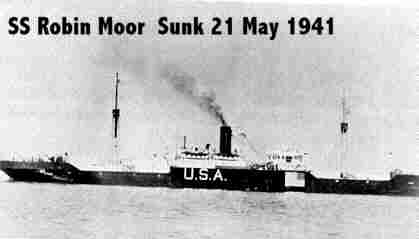
The other vet I'm thinking of today is a cousin, Richard Carlisle. Over the years my Mom lost touch with this branch of the family but she remembered that she had a cousin that served on the S.S. Robin Moor, a Merchant Marine vessel sunk by a German sub in May 1941. Anyone that thinks that the men that served in the Merchant Marine during the WWII era aren't Veterans needs to think again. If drafted by the army these men were released to continue serving aboard their ships. The Merchant Marine was crucial to the war effort. So please join me in thanking these men also today.


This originally appeared at The Apple Doesn't Fall Far From the Tree on 11 November 2006.

Wednesday, March 25, 2009

Medal of Honor - Abraham Jay Buckles

Abraham Jay Buckles was born 2 August 1846 near Muncie, Delaware, IN. He was the second child of Thomas Newton Buckles and Rachel Graham. It appears that about 1852 Thomas, in the company of his brother-in-law, James Madison Graham, succumbed to the lure of California gold. Thomas must have returned at some point, as the youngest child, J. Newton Buckles, was born about 1857, however in 1860 Thomas is found on the census for Vacaville, Solano, CA. Abraham was living with his grandparents, Abraham and Elizabeth Buckles in Centre Township, Delaware, IN. His mother and siblings were living next door.

History of the bench and bar of California:
Abraham Jay Buckles was born in Muncie, Indana, August 2, 1846. He was sent from home to live on a farm at the age of six years. In the winter season he attended school.

When the war broke out in 1861, he enlisted in a company raised at Muncie, under the call of the President for volunteers for three months' service. He was not yet 15 years old, and his grandfather would not permit him to go. When the call for troops to serve three years was made, he enlisted again. June 21, 1861, and, informing his people that he was determined in the matter, they made no further opposition. He went to Washington in Company E, 19th Indiana Infantry, which afterwards became a part of the famous fighting "Iron Brigade" of the Army of the Potomac.

Why he was sent to live with his grandfather, rather than stay with his mother I have no idea but as she was close by I can only imagine at the worry she must have felt at this time. Not only did Abraham enlist, but his older brother, Francis did as well. Francis would not return home.

Abraham's Medal of Honor Citation says very little:
BUCKLES, ABRAM J.

Rank and organization: Sergeant, Company E, 19th Indiana Infantry.
Place and date: At Wilderness, Va., 5 May 1864.
Entered service at: Muncie, Ind.
Birth: Delaware County, Ind.
Date of issue: 4 December 1893.

Citation: Though suffering from an open wound, carried the regimental colors until again wounded.

The Medal of Honor was awarded to Abraham for one instance of bravery in a single battle but this barely tells the tale of his Civil War service. Abraham was wounded several times and in the end he lost a leg. The History of Solano and Napa Counties, California gives a detailed and thrilling account of his service:
He was a lad of fifteen years when the tocsin of war called able-bodied men to the defense of the country and in June, 1861, he was among the number who responded to Lincoln's first call for three-year men, being attached to Company E, Nineteenth Indiana Volunteer Infantry. Mustered in at Indianapolis, his regiment became a part in the second Battle of Bull Run. In that engagement he was shot through the thigh and was confined in the hospital for three months, after which he again offered his services and took part in the first and second battles of Fredricksburg, Chancellorsville and Gettysburg, being attached to the color guard. It was his ambition to be the color bearer of his regiment and for that reason stationed himself on the left so that he would be next to the bearer and ready to take the colors in case the color bearer was injured. The bearer was wounded in the morning, and young Buckles promptly picked up the colors, which he proudly carried until the afternoon the same day, when he, too, was wounded, having received a shot through the right shoulder. Handing the flag to his comrade next in line, he was taken from field and was confined to the hospital for several months. His anxiety to be in the field of action once more secured his release before his wound was entirely healed, but he was able to resume his old post as color bearer and was serving in this capacity in the Battle of the Wilderness, when he was once more disabled, this time being shot through the body. As before, in spite of his intense suffering, he did not allow the colors to disappear, handing the flag to young Devilbuss, who lost his life soon afterward. At the Battle of the Wilderness the regiment became scattered in the rush through the woods, and inasmuch as he could see no field officer, Color Bearer Buckles led the charge himself, the men promptly following, and in the conflict Mr Buckles received what was thought to be a mortal wound, being shot through the body. In spite of the fact that he was so badly wounded as to be given up for dead, he managed to make his way to the rear, when the ambulance came up he was taken to the temporary hospital. The examining surgeon pronounced his case hopeless and would not even probe the wound, the same being true of his treatment in the field hospital, to which he was removed. Finally, when orders were issued to remove the inmates to Fredericksburg, Buckles sent for the physician and begged not to be left behind. The doctor replied that his orders were strict and as he had been given up to die, could not be removed. He remonstrated that the physicians had said two days before that he would die and that he found himself no worse, and finally obtained the promise that if he could stand when the ambulance came he would be removed to Fredericksburg and receive proper care. To make the promise good, Buckles stood with the aid of sticks for crutches, and was taken to the hospital, and as soon as his wounds were given attention he began to recover. He was able to rejoin his regiment before the Battle of Petersburg, having been promoted and commissioned second lieutentant. During all this time, however, his wound remained open and remained so until early 1870. While on skirmish duty, March 25, 1865, he was again wounded, this time in the right leg, which necessitated amputation seven inches from the body. His honorable discharge followed two months later, May 15, 1865, after the close of the war. He was awarded the medal of honor by congress for meritorious conduct upon the battlefield of the Wilderness, May 5, 1864. He returned home to Indiana, battle scarred and disabled, and as yet a mere boy in years, not nineteen years old.

Abraham returned home and went to school. He work variously as a teacher, a clerk and at other jobs as he could find them. On 5 December 1865, in Delaware County, IN, he married Louisa B. Conn and to them two daughters were born, Lola Bell in 1867 and Addie Jessie in 1868. In his spare time he undertook the study of law and in 1875 was admitted to the bar.

Abraham must have retained a relationship with his father as he moved his family to Solano County, CA in the spring of 1875 were he became quite successful. Again, from The History of Solano and Napa Counties, California:
In the spring of 1875 he was admitted to the bar and immediately thereafter came to California and located in Dixon, Solano county. Opening an office for the practice of his profession, the recognition of his exceptional ability and justice in the handling of legal complications was apparent from the first, and was the forerunner of a large and influential clientele. Substantial recognition of his ability came to him in 1879, when he was elected district attorney of Solano county under the new constitution, and at the close of his first term he was re-elected, serving altogether over five years. In 1884 he received the nomination for the office of superior judge and as the successful candidate he took office in January, 1885, and for over twenty years thereafter he held the office continuously. In April, 1905, he was appointed by Governor Pardee from the superior bench as one of the judges of the appellate court for the third district, and after the close of his term he again took up the practice of law, at this time locationg in Fairfield. As on former occasions he was successful in building on a commendable practice but he was not long allowed to confine his attention to private practice. Judge Devlin, who had been elected superior judge in 1908, held the office just one month and twenty days, when pressure of private business made it necessary for him to resign, whereupon Governor Gillett appointed Judge Buckles to fill the unexpired term.

Abraham remained on the bench until his death 9 January 1915 at a hospital in San Bernardino County, CA.

Sources:

History of the bench and bar of California: being biographies of many remarkable men, a store of humorous and pathetic recollections, accounts of important legislation and extraordinary cases, comprehending the judicial history of the state
By Oscar Tully Shuck
Contributor Oscar Tully Shuck
Edition: reprint
Published by The Commercial printing house, 1901
Original from the University of Michigan
Digitized Feb 20, 2008
1152 pages
pages 672 – 675, viewed at Google Books, 24 March 2009


History of Solano and Napa Counties, California : with biographical sketches of the leading men and women of the counties, who have been identified with its growth and development from the early days to the present time: History by Tom Gregory and other well know writers; Historic Record Company, Los Angeles, California [1912]; viewed at ancestry.com 8 Feb 2009.

Medal of Honor - Fr. Vincent R. Capodanno

In December 2006, following the funeral of John's Aunt Margaret, we all gathered at the John Venditti Post #1 of Italian-Amercian Veterans. One of John's uncles is very involved with the post and we were looking at the various citations and pictures on the walls.

One picture that caught my eye was that of Father Capodanno. I've been told by various people that John is related to him but I have as yet not proven the relationship. John's great-grandmother was Filomena Capadano. I know of three of her brothers but nothing that connects to Father Capodanno. I admit that I haven't worked very hard at researching the relationship but I have spent many hours reading about Father Capodanno.

Born February 13, 1929 in Richmond Co, NY, he was the youngest of the nine children of Vincent R. and Rachel Capodanno, Sr. His father died when he was only ten years old and the family struggled to support themselves. I have learned little else about his childhood years.

He attended a year at Fordham University and then entered the Maryknoll Missionary Seminary. His work sent him to Taiwan and later to Hong Kong. He requested to be assigned as a USN Chaplain serving with the US Marines. When his tour was up he requested an extension.

He was known as the Grunt Padre and was respected and revered by those he served with. He was killed September 4, 1967 in Que Son Valley, Quang Tin Province, South Vietnam, 30 miles south of Dan Nang. He had been shot in the hand earlier in the day but stayed in the field with his men. Later a mortar shell exploded near him, severely injuring his arm and still he stayed. He ministered to all those that he could get to. His death came from machine gun fire as he tried to help a corpsman. He was awarded the Medal of Honor posthumously.

*CAPODANNO, VINCENT R. Rank and organization: Lieutenant, U.S. Navy, Chaplain Corps, 3d Battalion, 5th Marines, 1st Marine Division (Rein), FMF. Place and date: Quang Tin Province, Republic of Vietnam, 4 September 1967. Entered service at: Staten Island, N.Y. Born: 13 February 1929, Staten Island, N.Y. Citation: For conspicuous gallantry and intrepidity at the risk of his life above and beyond the call of duty as Chaplain of the 3d Battalion, in connection with operations against enemy forces. In response to reports that the 2d Platoon of M Company was in danger of being overrun by a massed enemy assaulting force, Lt. Capodanno left the relative safety of the company command post and ran through an open area raked with fire, directly to the beleaguered platoon. Disregarding the intense enemy small-arms, automatic-weapons, and mortar fire, he moved about the battlefield administering last rites to the dying and giving medical aid to the wounded. When an exploding mortar round inflicted painful multiple wounds to his arms and legs, and severed a portion of his right hand, he steadfastly refused all medical aid. Instead, he directed the corpsmen to help their wounded comrades and, with calm vigor, continued to move about the battlefield as he provided encouragement by voice and example to the valiant marines. Upon encountering a wounded corpsman in the direct line of fire of an enemy machine gunner positioned approximately 15 yards away, Lt. Capodanno rushed a daring attempt to aid and assist the mortally wounded corpsman. At that instant, only inches from his goal, he was struck down by a burst of machine gun fire. By his heroic conduct on the battlefield, and his inspiring example, Lt. Capodanno upheld the finest traditions of the U.S. Naval Service. He gallantly gave his life in the cause of freedom.

Father Capodanno is buried in St. Peter's Cemetery, West Brighton, Richmond, NY. His memorial at findagrave.com has more than 145 notes.

Several Chapels, a road and a Navy Frigate have been named for Father Capodanno. There are many websites dedicated to his memory. Currently there is a call for Canonization of Father Capodanno.

I took this picture and made a rubbing of the traveling Vietnam Veterans Memorial Wall when it was in Syracuse. I was able to talk to the students on my bus about Father Capodanno a bit and it was nice to find them (and their teachers!) receptive to my commentary. I may never know if we're related but I am richer for having learned about his life.


The above is a slightly edited version that was originally published at Apple's Tree on 30 December 2006.

Tuesday, March 24, 2009

National Medal of Honor Day

Tomorrow is National Medal of Honor Day. To commemorate the day I will be writing about two of the honorees. Please join me tomorrow in honoring those that have received our nations highest distinction.


JOINT RESOLUTION

To designate March 25, 1991, as `National Medal of Honor Day'.

Whereas the Medal of Honor is the highest distinction that can be awarded by the President, in the name of the Congress, to members of the Armed Forces who have distinguished themselves conspicuously by gallantry and intrepidity at the risk of their lives above and beyond the call of duty;

Whereas only a few of the millions of men and women who have served the Nation in war, military operations, or other armed conflicts have received the Medal of Honor;

Whereas the 1st Medal of Honor awards were presented to 6 men on March 25, 1863, by the Secretary of War;

Whereas it is appropriate to honor the heroic recipients of the Medal of Honor;

Whereas public awareness of the importance of the Medal of Honor has declined in recent years; and

Whereas the designation of National Medal of Honor Day will focus the efforts of national, State, and local organizations striving to foster public appreciation and recognition of Medal of Honor recipients: Now, therefore, be it

Resolved by the Senate and House of Representatives of the United States of America in Congress assembled, That March 25, 1991, is designated as `National Medal of Honor Day', and the President is authorized and requested to issue a proclamation calling on the people of the United States to observe the day with appropriate ceremonies and activities.

HJ 652 CPH, 101st CONGRESS, 2d Session, H. J. RES. 652


You can find the names and citations of those who have received the award at both Home of the Heroes and the Congressional Medal of Honor Society, as well as the history of the award.